Blog
AI & Technology
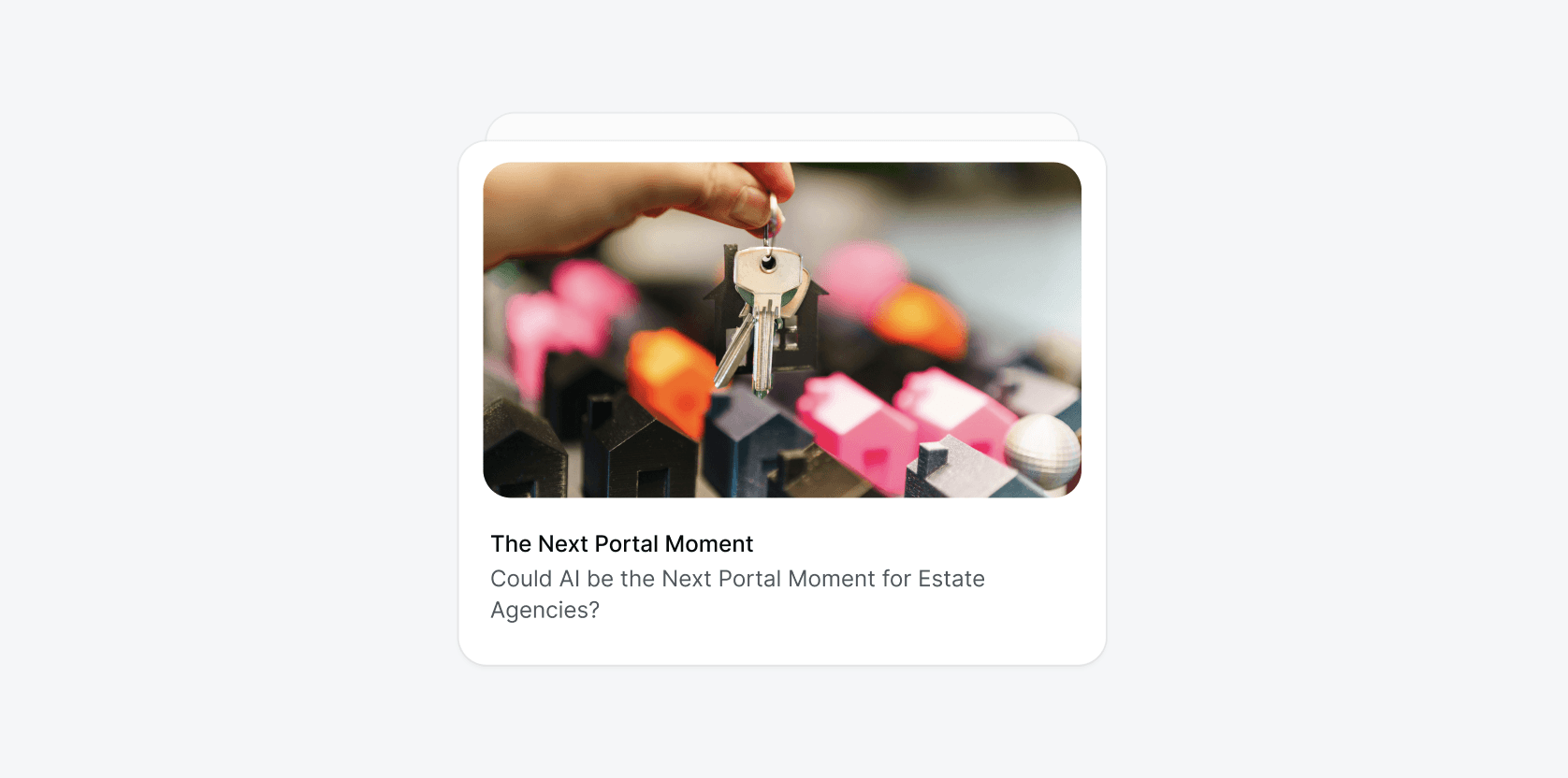
Is AI the next portal moment for estate agencies?
Just as property portals transformed how buyers discovered homes, AI is now reshaping how agencies handle client interactions. Early adopters will gain the same competitive advantage that came with embracing Rightmove and Zoopla—but only if they recognise the shift before it becomes essential.

Will Fletcher
Founder & COO
Every estate agency in the UK remembers the arrival of the portals. First came Rightmove, then Zoopla and OnTheMarket. Initially, they seemed like a convenience—a new way to reach buyers. Within a few years, they had become essential.
Today, we're at the beginning of a similar shift. This time, it's not about how buyers discover properties. It's about how agencies manage conversations, qualify leads, and scale their service. And once again, it's being driven by technology—AI assistants.
What portals changed
Before portals, estate agents managed listings through newspaper adverts, shop windows, and phone calls. Portals made property searches instant and self-serve. This transformed buyer expectations—clients no longer waited to hear from an agent before seeing what was available.
Agencies that adapted quickly gained an edge. Those that resisted eventually had no choice but to catch up. Portals didn't eliminate the role of the agent, but they redefined where value was delivered. Visibility became standard. Service became the differentiator.
What AI is starting to change
AI is having a similar effect today—not with listings, but with the client journey itself.
Enquiries used to be handled entirely by people. Every email, call, or form submission required someone to read and respond. That worked when volume was manageable. It no longer works when clients expect responses within minutes, across multiple channels, and outside business hours.
AI assistants are beginning to handle that initial workload by:
Responding instantly to new leads
Qualifying buyers and tenants through targeted questions
Booking viewings or arranging callbacks
Answering common queries about price, availability, and property details
Updating the CRM automatically
Just as portals changed how people found properties, AI is changing how people interact with agencies.
Why it feels optional—for now
In the early days of portals, many agencies saw them as an optional add-on. That changed rapidly once buyers and sellers began to expect them. Operating without a portal listing became a risk, not a choice.
AI is in a similar position today. It may seem optional now, but client expectations are already shifting. Buyers expect faster replies. Vendors expect a joined-up, efficient process. Agencies that meet those expectations with AI will have a clear advantage.
Over time, service quality will be measured not just by what you deliver, but by how consistently and quickly you deliver it.
A familiar pattern
What we're seeing now mirrors the portal moment:
Early adopters gain performance advantages
Client expectations shift rapidly
Technology becomes embedded in daily workflows
Value moves from availability to experience
Agencies that treat AI as a long-term capability—not a short-term experiment—will be best positioned to meet the demands of a changing market.
The future of the agent's role
AI won't replace estate agents. Just as portals didn't remove the need for negotiators, AI won't replace conversations, negotiation skills, or local knowledge.
But it will change what clients expect from their first interaction with your agency. It will change how teams manage volume. And it will change what operational excellence looks like.
The question isn't whether AI represents the next portal moment. It's whether your agency is ready to treat it as one.
Will Fletcher
Founder & COO
Share